

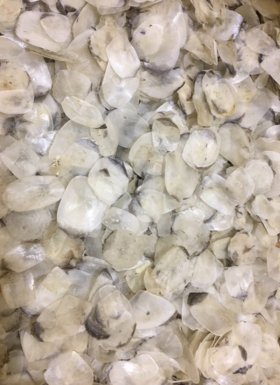
Dry fish scales

Scientific Name: Labeo rohita, Catla catla, Pink Perch, Black Pomfret, Anchovy, Croaker
Origin: Freshwater / Deep Sea
Form: Scales
Nature: Dry
Process: Sun-Dried / Machine-Dried

Scales of Indian carp fish such as Rohu (Labeo rohita) and Catla (Catla catla) are proven sources of fish collagen. They exhibit good fibril-forming ability and high solubility. Rohu is commonly found in rivers across northern, central, and eastern India. Catla, also known as the major Indian carp, is an economically important South Asian freshwater fish in the carp family, Cyprinidae.

NIZONA dry fish scales from Labeo rohita and Catla catla are cleaned, sun-dried, weighed, and packed.
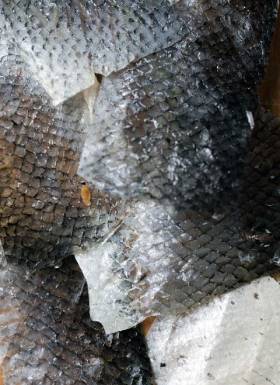
Dry fish skin

Scientific name: Pangasius bocourti, Tilapia, and Unicorn Leather Jacket
Origin: Freshwater / Deep sea
Form: Skin
Nature: Dry
Process: Sun-dried / Machine-dried

Pangasius bocourti (Basa fish) is a species of catfish in the family Pangasiidae. Basa skin is a major by-product of the fish-processing industry in India and can be obtained consistently. Studies indicate that Pangasius bocourti skin contains abundant collagen, and the extraction yield is quite high. Being a significant by-product, Basa skin often causes wastage and pollution, but it also offers a valuable source of collagen. The extracted collagen contains both non-essential and essential amino acids, predominantly glycine, proline, and alanine.
Tilapia skin is also highly valued for its many benefits, including vitamins E and C, both of which improve the quality and health of the skin.

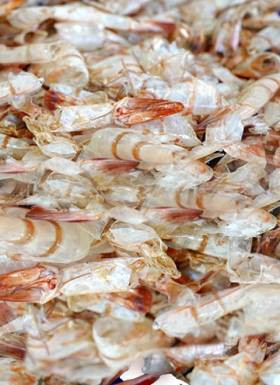
Dry shrimp shells and head

Scientific name: Litopenaeus vannamei
Origin: Freshwater / Deep sea
Form: Shells and head
Nature: Dry
Process: Sun-dried / Machine-dried

Shrimp Waste to Wealth
This shrimp waste can be used to produce chitin, chitosan, and glucosamine. Shrimp waste contains protein, chitin, and minerals. Removing the protein and minerals yields chitin.

Chitin is a raw material for chitosan and glucosamine hydrochloride. It is a linear polymer of anhydro N-acetyl-D-glucosamine. Hydrolysis of chitin using concentrated hydrochloric acid (HCl) produces glucosamine hydrochloride. Deacetylation with hot concentrated sodium hydroxide solution (caustic soda) produces chitosan.

Chitosan can be used to control obesity and reduce cholesterol. It can also be used to treat external ulcers and chronic disorders.

Glucosamine sulfate is consumed for osteoarthritis, glaucoma, jaw pain, and joint pain, including knee and back pain. Glucosamine is also used in some skin creams to help control arthritis pain.

Copyright by Nizona 2021 | By Macvision